


The pursuit of Health, Safety, and Environmental (HSE) excellence in the oil and gas industry is not just a regulatory requirement but a fundamental aspect of responsible and sustainable operations. The high-risk nature of the industry, combined with its global environmental impact, makes HSE excellence a critical priority. The strategies and practices that seasoned professionals can adopt to achieve and maintain HSE excellence, with a particular focus on setting the benchmark in this field.
Al Manazel Integrated Co. L.L.C. (MICO) has established itself as a leader in the oil and gas sector, particularly within the Middle East. Founded in 2015, the company has rapidly grown to become a key player, providing a range of services that enhance operational efficiency while prioritizing health, safety, and environmental standards. MICO’s extensive portfolio includes upstream, midstream, and downstream services such as pipeline management, facility cleaning, corrosion monitoring, and more. Their commitment to HSE is embedded in their corporate culture, reflecting their understanding that safety and environmental stewardship are essential to long-term success in the industry.
1. Employee Training: Building a Safety Culture
In the oil and gas industry, where the risks are significant and the margin for error is slim, employee training is paramount. A well-trained workforce is the cornerstone of any effective HSE program. Training programs should be designed to equip employees with the necessary knowledge and skills to perform their duties safely, while also fostering a culture where safety is a shared responsibility.
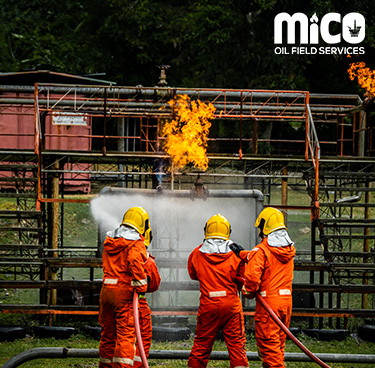
At MICO, training is not just about compliance; it is about empowerment. The company invests heavily in continuous training and development programs that are tailored to the specific needs of their workforce. This includes everything from basic safety training for new hires to advanced courses for seasoned professionals. These programs are reinforced with regular drills and simulations, ensuring that all employees are well-prepared to respond to emergencies. By creating a culture where safety is ingrained in every aspect of the job, MICO reduces the likelihood of accidents and enhances overall operational efficiency.
2. Risk Assessment: Identifying and Mitigating Hazards
Risk assessment is a critical process that involves identifying potential hazards, evaluating the risks they pose, and implementing measures to mitigate these risks. In the oil and gas industry, where operations often involve hazardous materials, high pressures, and extreme environmental conditions, a thorough risk assessment is essential to prevent accidents and protect both personnel and the environment.
MICO utilizes state-of-the-art risk assessment tools and methodologies to evaluate the safety of their operations. This includes advanced modeling and simulation techniques that allow the company to predict potential hazards and assess the effectiveness of their control measures. For example, MICO’s use of real-time monitoring systems enables them to detect issues before they escalate into major incidents, thereby reducing the risk of accidents and minimizing environmental impact. By regularly reviewing and updating their risk assessments, MICO ensures that their safety practices remain effective and relevant in a constantly evolving industry.
3. Continuous Improvement: Sustaining HSE Excellence
Continuous improvement is a core principle of HSE excellence. It involves regularly reviewing and updating safety procedures, incorporating new technologies, and learning from past incidents to prevent future occurrences. A commitment to continuous improvement ensures that HSE practices are not only maintained but are enhanced over time, adapting to new challenges and opportunities.
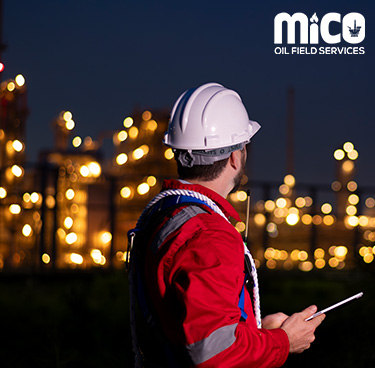
MICO’s approach to continuous improvement is driven by a philosophy of Kaizen, or continuous incremental improvements. The company encourages a culture of innovation, where employees at all levels are empowered to suggest and implement improvements. This proactive approach is supported by MICO’s investment in cutting-edge technologies, such as predictive analytics and real-time monitoring systems, which provide the data and insights needed to make informed decisions about safety and environmental practices. By continuously refining their processes, MICO not only improves safety but also enhances operational efficiency, making them a leader in HSE excellence within the industry.
4. Environmental Stewardship: Beyond Compliance
In the modern oil and gas industry, environmental stewardship is more than just a regulatory requirement; it is a moral and strategic imperative. Companies that prioritize environmental protection are better positioned to build trust with stakeholders, reduce their environmental footprint, and ensure the long-term sustainability of their operations.
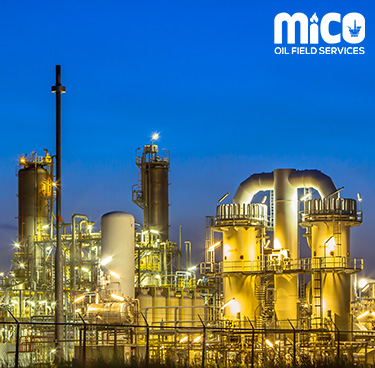
MICO takes a proactive approach to environmental stewardship, integrating environmental considerations into every aspect of their operations. This includes the use of environmentally friendly technologies and practices, such as bioremediation for cleaning up oil spills and advanced waste management techniques. MICO also actively monitors their environmental impact, using real-time data to minimize emissions, reduce waste, and optimize resource use. Their commitment to environmental protection is reflected in their ISO 14001 certification, which demonstrates their adherence to international environmental management standards.
5. Technological Innovation: Enhancing HSE Practices
Technological innovation plays a crucial role in enhancing HSE practices in the oil and gas industry. From advanced monitoring systems to automated safety protocols, technology enables companies to improve safety, efficiency, and environmental performance.
MICO has embraced technological innovation as a key component of their HSE strategy. The company employs a range of advanced technologies, including drones for pipeline inspections, real-time data analytics for risk assessment, and automated safety systems that can detect and respond to potential hazards before they escalate. These technologies not only enhance safety but also improve operational efficiency, reducing downtime and minimizing the risk of costly incidents. By staying at the forefront of technological innovation, MICO continues to set the standard for HSE excellence in the industry.
Achieving HSE excellence in the oil and gas industry requires a comprehensive and strategic approach. As we have seen, this involves a combination of employee training, risk assessment, continuous improvement, environmental stewardship, and technological innovation. By integrating these elements into their operations, companies can create a safe, efficient, and sustainable work environment.
HSE excellence serves as a model for others in the industry. Their commitment to safety, environmental protection, and continuous improvement not only protects their workforce and the environment but also enhances their operational performance and reputation. As the industry continues to evolve, the importance of HSE excellence will only grow, and companies that prioritize these standards will be better positioned to navigate the challenges and opportunities of the future.